Deprecated: Creation of dynamic property SERPZILLA_context::$_page_obligatory_output is deprecated in /home/businessmen/public_html/wp-content/uploads/.serpzilla/serpzilla.php on line 1654
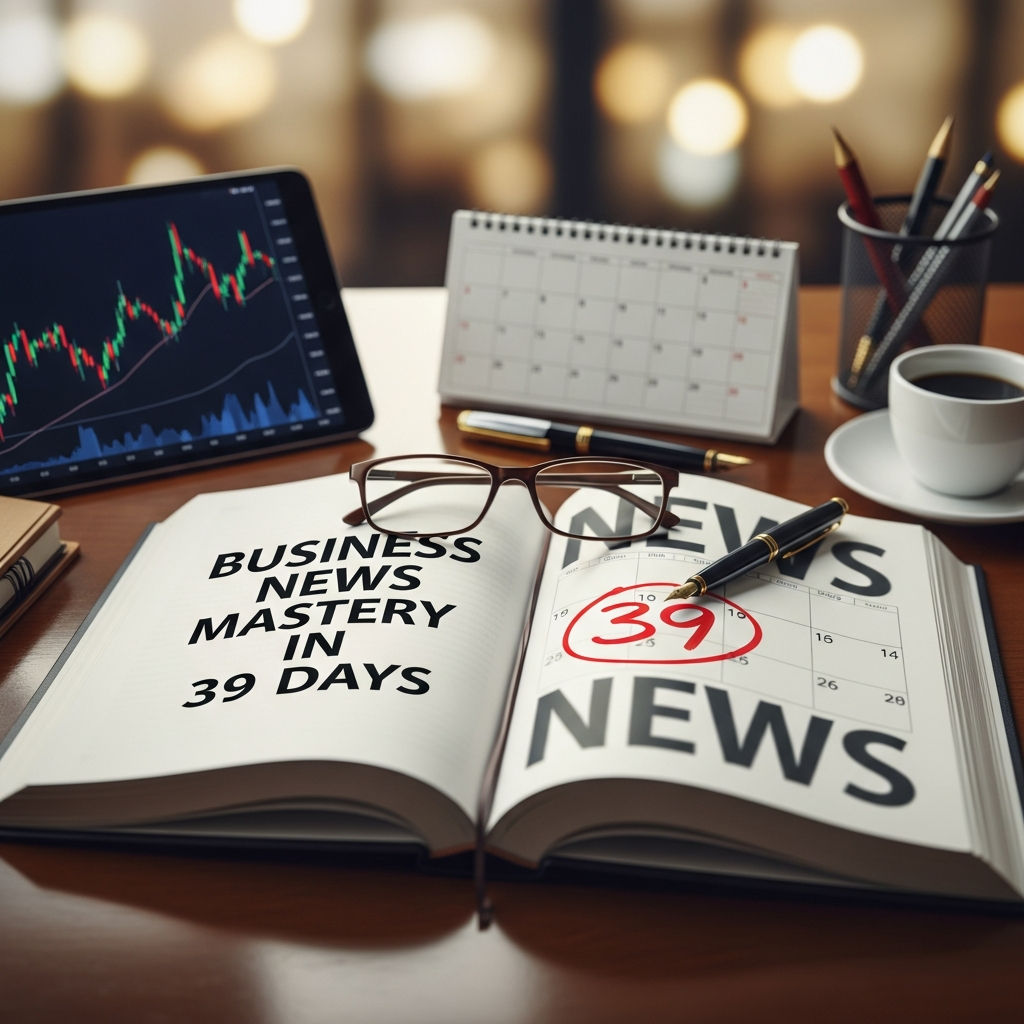
How to Master Business News in 39 Days: A Comprehensive Guide
In today’s fast-paced global economy, information is the most valuable currency. Whether you are an aspiring entrepreneur, a seasoned investor, or a professional looking to climb the corporate ladder, understanding business news is no longer optional—it is a survival skill. However, the sheer volume of data, jargon, and conflicting opinions can be overwhelming.
What if you could transform from a confused spectator into a sharp market analyst in just over five weeks? This guide outlines a structured, 39-day challenge designed to help you master business news, understand market fluctuations, and predict economic trends with confidence.
Phase 1: Building the Foundation (Days 1-7)
Before you can analyze the news, you must speak the language. The first week is dedicated to de-jargonizing the financial world and setting up your information ecosystem.
Day 1-3: The Vocabulary of Value
Spend the first three days mastering fundamental terms. You cannot understand a headline about “Hawkish Fed sentiment” if you don’t know what the Federal Reserve does. Focus on:
- Macroeconomic Indicators: GDP, Inflation (CPI), Unemployment rates, and Interest rates.
- Stock Market Basics: Bull vs. Bear markets, P/E ratios, Market Cap, and Dividends.
- Corporate Finance: Revenue vs. Profit, EBITDA, and Balance Sheets.
Day 4-7: Curating Your Feed
Not all news is created equal. Use these days to filter the “signal” from the “noise.” Subscribe to reputable sources and organize them. Your toolkit should include:
- The Big Three: The Wall Street Journal, The Financial Times, and Bloomberg.
- News Aggregators: Use apps like Feedly or Google News to follow specific sectors.
- Newsletters: Sign up for Morning Brew or Robinhood Sherpa for digestible daily summaries.
Phase 2: Decoding the Sectors (Days 8-21)
Business news isn’t a monolith; it’s a collection of interlocking industries. During the next two weeks, you will focus on specific sectors to understand how they move the needle.
Day 8-12: Big Tech and Innovation
Tech companies often lead the market. Learn the difference between “Big Tech” (Apple, Microsoft, Google) and emerging sectors like AI, SaaS, and Fintech. Pay attention to how regulatory news (antitrust laws) affects their stock prices.
Day 13-17: Banking and the Federal Reserve
The “Fed” is the heartbeat of the global economy. Spend these days learning how interest rate hikes or cuts impact consumer spending, corporate borrowing, and mortgage rates. Understanding the central bank is 50% of mastering business news.
Day 18-21: Energy and Commodities
From oil prices to gold and lithium, commodities dictate the cost of living. Learn how geopolitical tensions in the Middle East or trade policies in China ripple through the price of gas and groceries.
Phase 3: The Art of Analysis (Days 22-35)
Now that you have the vocabulary and the context, it’s time to move from “reading” to “analyzing.” This phase is about connecting the dots.
Day 22-25: Reading Between the Lines of Earnings Reports
Public companies release quarterly earnings (10-Qs). Don’t just look at the headline “Profit Up 10%.” Look at the “Guidance”—what the CEO says about the future. Often, a company reports record profits but the stock price drops because the future outlook is grim.
Day 26-30: Geopolitics and Global Trade
Business does not happen in a vacuum. Analyze how elections, wars, and trade agreements affect markets. For example, how does a new tariff on European cars affect US-based manufacturers? Use this week to follow international sections of the Financial Times.
Day 31-35: Identifying Market Psychology
Markets are driven by two emotions: Fear and Greed. Study the “Fear & Greed Index.” Learn about “contrarian investing”—the idea of buying when others are afraid and selling when others are overly optimistic. Start tracking how “hype” (like the NFT craze or AI boom) follows a predictable lifecycle.
Phase 4: Synthesis and Mastery (Days 36-39)
The final four days are about internalizing your knowledge and testing your predictive abilities.
Day 36: The “So What?” Test
Pick three major news stories from the day. For each, ask “So what?” If the price of oil went up, how does that affect airline stocks? How does it affect Amazon’s shipping costs? Mastering business news means seeing the second and third-order effects of every event.
Day 37: Follow the Money
Look at institutional “Smart Money.” What are hedge funds and large pension funds buying? Use sites like WhaleWisdom to see 13F filings. Understanding where the big players are moving their capital gives you a roadmap for future trends.
Day 38: Practice Mock Predictions
Write down three predictions for the coming month based on current news. Will a specific stock rise? Will the Fed hold rates steady? Documenting your logic helps you identify flaws in your reasoning later.
Day 39: Establishing a Sustainable Routine
Mastery isn’t a destination; it’s a habit. On your final day, design a 20-minute daily routine that keeps you sharp. A sample routine might be:
- 5 Minutes: Scan headlines on Bloomberg.
- 10 Minutes: Read one deep-dive long-form article.
- 5 Minutes: Listen to a market update podcast (e.g., WSJ’s “The Journal”).
Why 39 Days?
Psychological research suggests that it takes roughly 18 to 66 days to form a new habit. By day 39, you are past the “trough of disillusionment” where the jargon felt like a foreign language. You have reached the “slope of enlightenment,” where the interconnectedness of global markets becomes visible.
Tools to Accelerate Your Learning
To stay ahead of the curve during these 39 days, leverage these digital tools:
- TradingView: For visualizing market data and charts.
- Seeking Alpha: For crowdsourced investment analysis and earnings call transcripts.
- Investopedia: Your “dictionary” for any term you don’t recognize.
- X (formerly Twitter): Follow “FinTwit” (Financial Twitter) to see real-time reactions from analysts, though be wary of the noise.
Final Thoughts: The Competitive Edge
Mastering business news in 39 days doesn’t mean you will become a billionaire overnight. It means you will stop being a victim of economic cycles and start being a participant. You will understand why your grocery bill is rising, why your company is pivoting its strategy, and where the next big opportunity lies.
The world of business news is a massive, ongoing story. By following this 39-day roadmap, you are choosing to finally understand the plot. Start today—your future self will thank you.